Your Catalog Isn't a Museum: The Case for Retiring Products
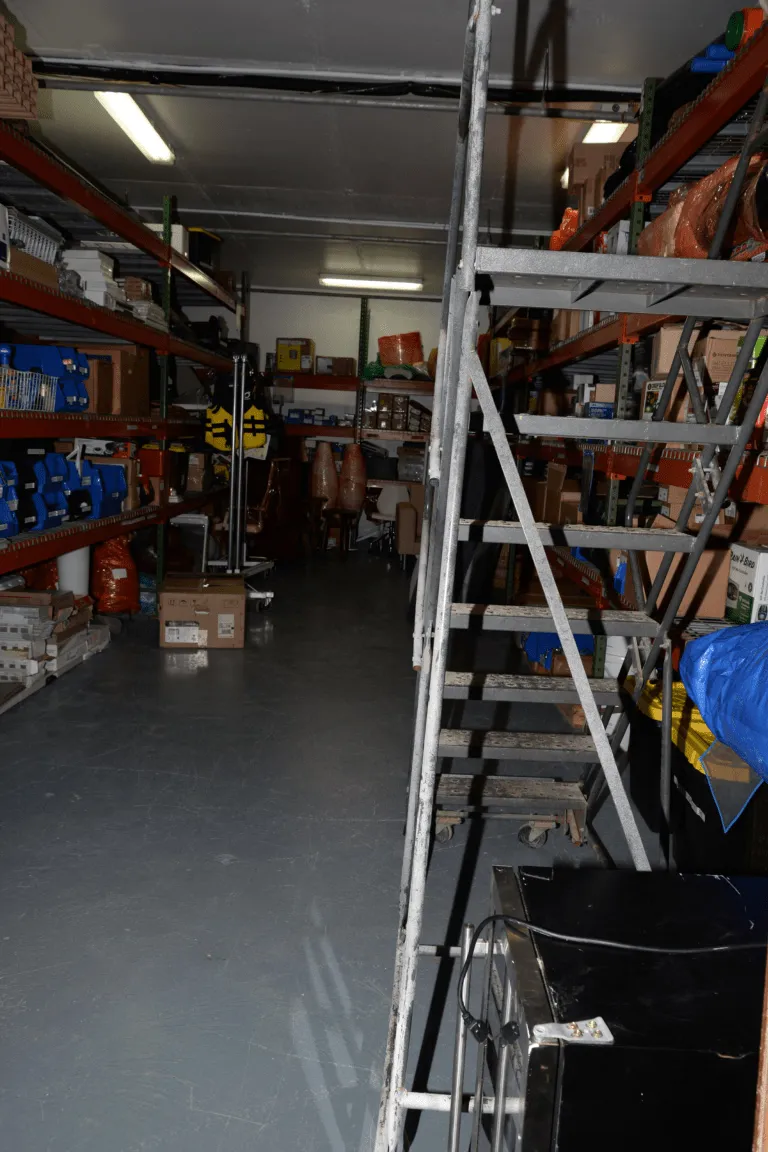
Photo: Federal Bureau of Investigation, Public domain, via Wikimedia Commons
Every small business I've ever talked to has the same drawer. Sometimes it's literal — a shelf in the back with discontinued samples and one lonely display box — and sometimes it's a spreadsheet tab labeled OLD that hasn't been opened since the last time someone quit. Either way, it's where products go when they stop selling but nobody has the heart to make it official.
That drawer is expensive. It just doesn't show up on any invoice.
Catalog debt, defined
Borrow the concept from engineering. Technical debt is what accumulates when you ship fast and never go back to clean up. Catalog debt is the same idea applied to your product lineup: the maintenance, confusion, and stale information that pile up when SKUs stay live long past their usefulness.
It lands in three places.
Maintenance. Every product you list is a thing that has to stay true — photos, copy, dimensions, variants, pricing, care instructions, compliance language. Multiply that by every surface where the product appears: your own site, a downloadable PDF, a wholesale line sheet, a marketplace listing. A SKU you haven't sold since spring is still generating homework.
Decision cost. Shoppers don't compare two things. They compare everything you put in front of them. Add twelve near-identical variations to a category and the buyer doesn't feel served — they feel tired. Tired shoppers leave.
Credibility. This is the one that actually hurts. A stale listing with an out-of-stock size, a photo of a discontinued colorway, or a spec that no longer matches the current build teaches the customer to distrust the whole page. One wrong detail contaminates the twelve right ones next to it.
In 2026 the stakes are higher than they used to be, because a digital catalog is a living document. When your catalog updates in real time, every dead SKU is a visible liability rather than a quiet page in a printed book nobody reprints.
Five signals you're carrying too much
- A search for a basic term on your own site returns twenty results, and half are variations on the same item.
- You can't answer "who buys this?" without pulling a report.
- The last time a product's photos were updated, the phone in the shot still had a home button.
- A customer emails to ask whether something is still available, and you have to go check the warehouse.
- Your three best-sellers get less than a tenth of the visual real estate on your homepage.
Any two of those is a signal. All five is a pattern.
The trap of "somebody might want it"
The fear behind hoarding SKUs is legitimate: retire a product and you might lose a customer who came for exactly that. But think about the actual experience. That customer finds a listing, tries to add it to the cart, and discovers it's unavailable — or orders it and waits three days for an apology email. That's not a saved sale. That's a slow-motion disappointment you scheduled in advance.
And retiring is not the same as deleting. Two good middle paths: an archive page that stays live and searchable, clearly marked as discontinued, pointing to the closest current substitute; and a quote-only listing that's hidden from browse but orderable on request for your long-standing accounts.
A 30-day retirement audit
Week one: pull the data
Export units sold, revenue, gross margin, return rate, and last order date by SKU for the past twelve and twenty-four months. Don't rank by revenue alone. A low-volume custom item with strong margin and zero returns may deserve to stay while a mid-volume item that eats support time every week does not.
Week two: sort into four buckets
Keep, Refresh, Quote-only, Retire. Force yourself to put something in every bucket — an audit where everything lands in Keep isn't an audit, it's a filing exercise.
Week three: fix the Refresh list
Be ruthless about scope. Cap it at the products with the clearest revenue upside and actually rewrite the copy, reshoot the lead image, and correct the specs. A Refresh list of forty items becomes a Refresh list of zero.
Week four: retire with a trail
Redirect the old URL or leave the archive page live. Add a substitute recommendation. Email past buyers of that SKU with a heads-up and a link to what replaced it. Then sweep the leftovers: the PDF, the marketplace listings, the line sheet, the trade show binder.
Retiring without losing the people who want it
Give a runway. Announce a final order window and honor it. Always pair a retirement with a next-best option instead of a dead end. Keep the archive page useful rather than blank. And tell repeat buyers directly — they'd much rather hear it from you than discover it at checkout.
Why a living catalog makes this easier
In print, retiring a product means reprinting an entire book, which is why nobody does it. That's the old excuse. A digital catalog you can edit turns retirement into a five-minute decision: unpublish, archive, redirect, done. On MyCatalog that's a checkbox and a note, not a print run.
The tool isn't the point, though. The habit is. A catalog is a shelf, not a storage unit — and a shelf only works when somebody periodically takes things off it.