Deal Closed Before the Quote: How Field Sales Reps Are Turning Their Phones Into Instant Catalogs

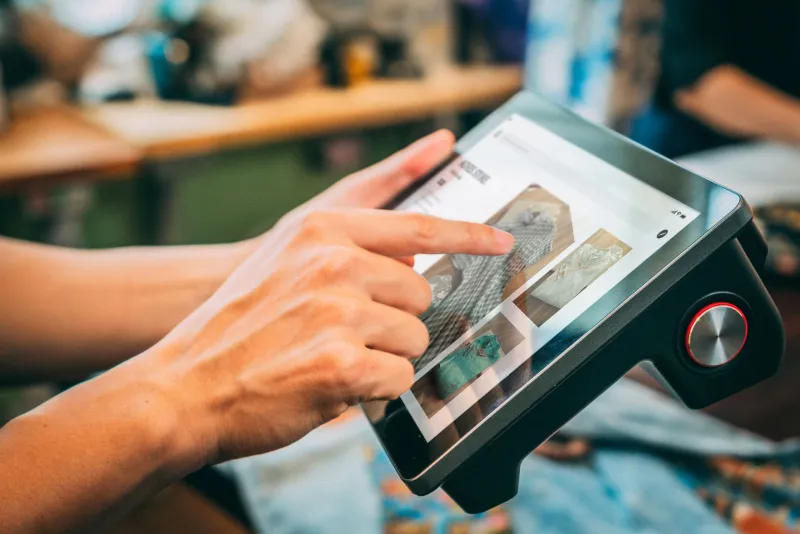
Photo: sales rep showing product catalog on smartphone to client outdoors, via c8.alamy.com
Ask a veteran outside sales rep about their most valuable tool and you might expect to hear about CRM software or a polished pitch deck. More often than not, these days, the answer is simpler: a catalog link saved to their phone's home screen.
The math is brutal and beautiful at the same time. A traditional quote request — rep emails the office, someone builds a quote, PDF goes out, buyer eventually opens it — can take two to five business days. A rep who can pull up a clean digital catalog on the spot, walk the customer through it, and text them a link before the coffee gets cold? That deal is often done before a competitor even knows there was a deal.
The Parking Lot Close Is Real
Talk to road warriors across industries — industrial supply, food service equipment, promotional products — and you'll hear the same story repeated with different details. The moment of truth rarely happens in a scheduled conference room. It happens in the buyer's parking lot, at a trade show booth in Las Vegas or Chicago, during a chance run-in at a distributor's counter.
"I used to say 'let me get back to you on that,' and by the time I did, the moment was gone," one regional rep for a commercial flooring supplier told us. "Now if a contractor asks whether we carry a certain tile, I've got the answer in ten seconds and they're looking at it — not a description of it, the actual product, in color, with the specs."
That immediacy matters because buying decisions are emotional and momentum-driven. Every delay is a chance for doubt, a competing quote, or simple forgetfulness to creep in.
Building Your Go-To Link: A 15-Minute Workflow
The reps who win with digital catalogs aren't improvising. They've built a single, always-current share link that works in any situation. Here's the workflow that keeps coming up:
Minute 1–5: Pick your greatest hits. Don't dump your entire product line into one catalog. Choose the 30–60 SKUs that drive 80% of your deals. If a buyer wants something niche, you can add it later — but your core link needs to load fast and answer the most common questions.
Minute 6–10: Make every product page self-sufficient. Each item needs a clear photo, price or price-tier info, dimensions, and any compliance or spec details your buyers ask about repeatedly. Assume the customer will forward this link to their boss with zero context. Does it hold up?
Minute 11–13: Organize for the thumb, not the desktop. Group products the way buyers think — by application, by project type, by problem solved. A restaurant equipment rep might organize by kitchen station. A signage rep by use case: storefront, event, vehicle.
Minute 14–15: Save it where your thumb lives. Home screen shortcut, pinned text thread, email signature. The whole point is that sharing takes less effort than small talk.
What to Include — and What to Ruthlessly Cut
The best field catalogs are aggressively edited. Include:
- Hero-quality photos — one great image beats four mediocre ones
- Real pricing or at least tier ranges — buyers respect transparency, and hiding prices just adds a step where deals die
- Lead-time and stock signals — "ships in 48 hours" closes deals; "call for availability" kills them
- A clear next step — a tap-to-call button, an order link, your direct number
Cut without mercy:
- Dense paragraphs of marketing copy — nobody reads those on a phone in a parking lot
- Legacy PDF attachments buried in the catalog
- Discontinued items, seasonal leftovers, and anything you'd have to apologize for
Speed Is the New Relationship
There's a lingering belief that relationship selling means being the rep who remembers birthdays. That still matters. But ask buyers under 45 what makes a vendor feel reliable, and the answer skews toward responsiveness: they had the answer when I needed it.
A current, fast, shareable catalog signals exactly that. It says you run a tight operation. It says the rep in front of them and the company behind them are on the same page — literally.
The reps making the most of this aren't the most technical people in the building. They're the ones who realized that in modern field sales, the gap between "I'll send you something" and "here, take a look right now" is where deals are won and lost.
Fifteen minutes of setup. A lifetime of faster closes. That's a trade most sales professionals will take every day of the week.